
Roco Kingdom PvP Tips: Win the Mana Race
Roco Kingdom PvP tips for the four-mana format: energy math, safe switches, response skills, speed control and the first ten games that teach you.
Roco Kingdom PvP is not a knockout race. In the Chinese version each player brings six Jinies and starts with four mana; a fainted Jinie removes one mana, and the first side to lose all four loses. You can win with two Jinies still standing. You can lose with a full health bar and no answers.
That single rule changes how you should play. Every trade is a mana trade, every switch is a tempo decision, and every expensive skill is a loan against your next turn.
The four-mana, six-Jinie rules are confirmed in the Chinese launch version. The global beta may use a different ladder format. Confirm the rules in-game before building around a specific count.
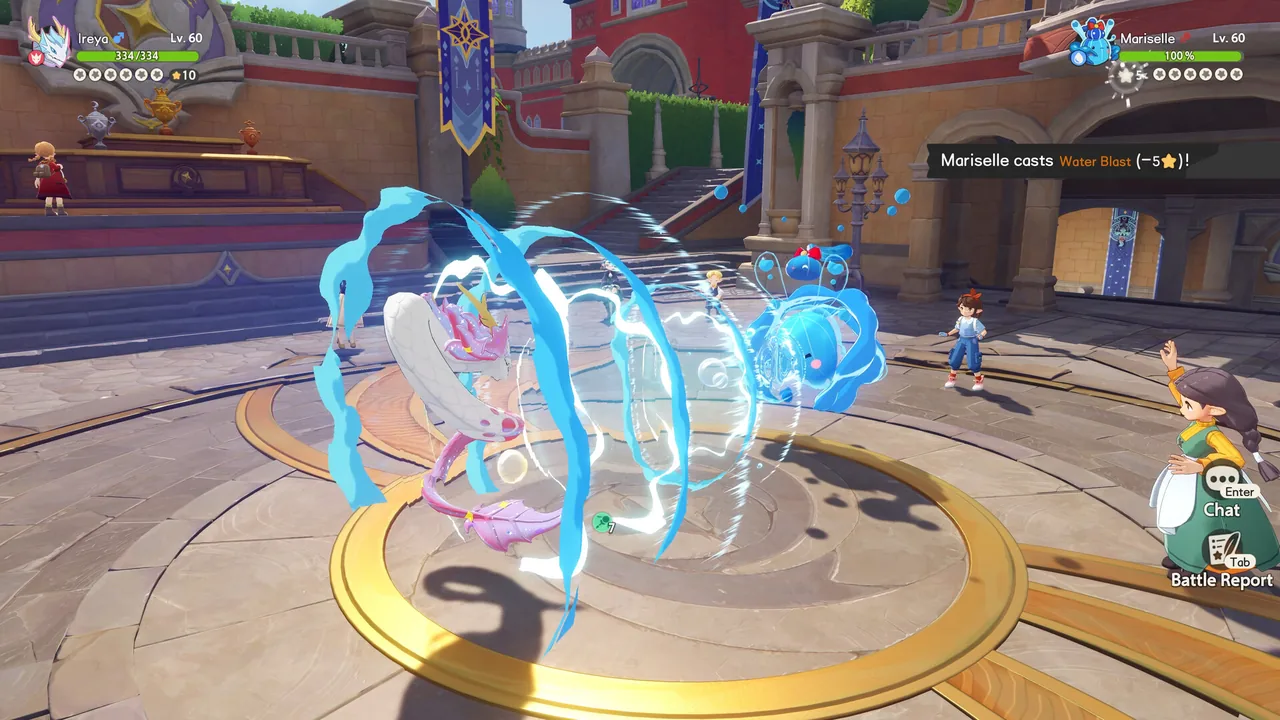
Rule one: count mana, not health
At the start of a match, both sides have four mana. Track it out loud if you have to.
- A knockout is worth one mana.
- A Jinie at 10% health is still a full mana piece until it dies.
- A trade that leaves your Jinie at 10% and kills theirs is a win, even if the health bar looks bad.
- A double knockout is neutral on mana but can be a win on tempo if you have the better remaining pieces.
This is why sacrificing a low-value Jinie to remove a key piece is often correct. The scoreboard is the mana count.
Rule two: protect the piece, not the health bar
New players heal the Jinie in front of them. Good players heal the Jinie that answers the opponent's win condition.
Ask: if this Jinie dies, which of my remaining five can replace its job? If the answer is "none", it is your key piece, and it should leave the field before it takes a fatal hit.
Switching is not cowardice. It is how you convert a bad matchup into a good one without paying a knockout.
Rule three: make the switch safe
A switch is only safe if the incoming Jinie can survive the turn it arrives. That means:
- Switch into a resist, not a neutral body.
- Switch after the opponent has spent their expensive skill, not before.
- Switch when the opponent is likely to set up rather than attack.
- Do not switch twice in a row just to avoid a decision.
The best team guide calls the lead slot a pivot for this reason. A lead that cannot switch out cheaply is a liability in every bad matchup.
Rule four: use response skills on purpose
The Chinese combat system includes "response" skills that refund energy and add an effect when they match the opponent's action. That makes them prediction tools, not automatic buttons.
A response skill is correct when:
- The opponent's last two actions suggest the same category.
- You can afford the loss if the read is wrong.
- The refund opens a follow-up attack next turn.
It is wrong when you are guessing. A missed response is often worse than a neutral attack because you paid the cost without the payoff.
Rule five: win the speed tie before you need it
Speed decides who moves first, and first move decides whether a setup skill resolves before the answer. In the Chinese version, players memorize the speed stats of common Jinies; you do not need a spreadsheet to start, but you do need to know your own team's order.
Before a match, rank your six by speed. Then ask:
- Who moves first against the opponent's likely lead?
- Who can revenge-kill after a knockout?
- Who is too slow to stay in against a fast attacker?
If your whole team is slower, you need a bulky answer or a priority-like tool, not more damage.
Rule six: weather is a plan with an expiry date
Weather boosts matching skills and gives a team a clear win condition. It also tells the opponent exactly what you are trying to do.
A weather plan needs:
- A setter that can enter safely.
- An abuser that threatens a knockout under the weather.
- A backup setter or a way to win without the weather.
If you only have the first two, a single well-timed knockout ends your game. The counters guide explains how to break a weather core.
The first ten games plan
Do not try to climb on day one. Use the first ten games to learn:
- Games 1–3: play your default team and note which Jinie dies first every time. That is your weak slot.
- Games 4–6: practice one safe switch per game. Do not worry about winning.
- Games 7–8: count mana every turn and write down the turn you lost the lead.
- Games 9–10: test one counter slot against the matchup that beat you.
After ten games, change one thing. Not six.
Common PvP mistakes
- Clicking the biggest attack every turn. You run out of energy and lose the next two turns.
- Staying in a losing matchup to "save the switch". The switch is cheaper than the knockout.
- Healing the wrong piece. Save the healer for the win condition, not the lead.
- Ignoring the opponent's mana. If they are at one mana, a single knockout ends the game; play for it.
- Copying a tournament team without the skill for it. A complex team you cannot pilot loses to a simple team you understand.
What to practice next
Once the basics are automatic, add one layer at a time:
- Track the opponent's energy, not just your own.
- Predict the switch and punish it.
- Build a second team for a different archetype.
- Review one replay per session.
The endgame guide covers how PvP fits into the long-term loop, and the type matchups guide covers the coverage layer.
Sources
Companion wiki
For the full 18-element chart behind this guide, use the Roco Kingdom Wiki. It holds the full reference tables; this site stays focused on decisions and routes.
FAQ
How many mana does each player have? Four in the Chinese version's PvP. A knockout removes one, and the first side to zero loses.
Is PvP level-equalized? Yes in the Chinese version, which reduces the value of raw level advantage. Global beta rules are unconfirmed.
Can I switch Jinies during battle? Yes. Switching is a core defensive tool, not a limited resource.
Is PvP pay-to-win? The beta has no in-app purchases. Launch monetization is not fully detailed, but official messaging emphasizes capture over purchase.
Official source: Roco Kingdom official site — PvP and combat system announcements. Community discussion is active on Discord.
More Roco Kingdom Guides
How Roco Kingdom co-op works: friend requirements, shared gathering and combat XP, home visits, blessing eggs and the etiquette that keeps groups together.
Counter Roco Kingdom's burst, stall, weather, speed and lifesteal teams with role-based answers, safe switches and a mana-first game plan.
A repeatable Roco Kingdom daily loop for 10, 20 or 45 minutes: academy tasks, home commissions, rare seeds, bosses and breeding upkeep.
Roco Kingdom's endgame loop: awakening, bloodline projects, PvP, weekly bosses, breeding and the one-week plan that keeps progress moving.
Navigate Carosia efficiently: region order, tower and teleport unlocks, mount upgrades, weather statues and the exploration loop that pays.
Earn Roco Kingdom coins efficiently: one-time coin drawers, repeatable pickup routes, daily commissions and the purchases worth saving for.
Official Roco Kingdom PC and mobile requirements, plus the settings to change first for a stable frame rate in the global beta.
What to prioritize at every Roco Kingdom level band, from the first hour to the level 30 home unlock and the 40+ awakening grind.